




You know, dear, if you’re lookin’ to snap a good picture of them waves crashing, you gotta know what you’re doin’. Not just pointin’ your camera and pressin’ the button. Nope, it’s a bit more to it than that. You gotta understand them waves, the light, and how to keep that camera steady when the ocean’s all wild and splashin’. I ain’t no fancy photographer, but I’ll tell ya what I know. Now, let’s talk about this “Sea Wave Dynamic Freezing Photography” business, and I’ll tell you how to catch them waves at just the right moment.
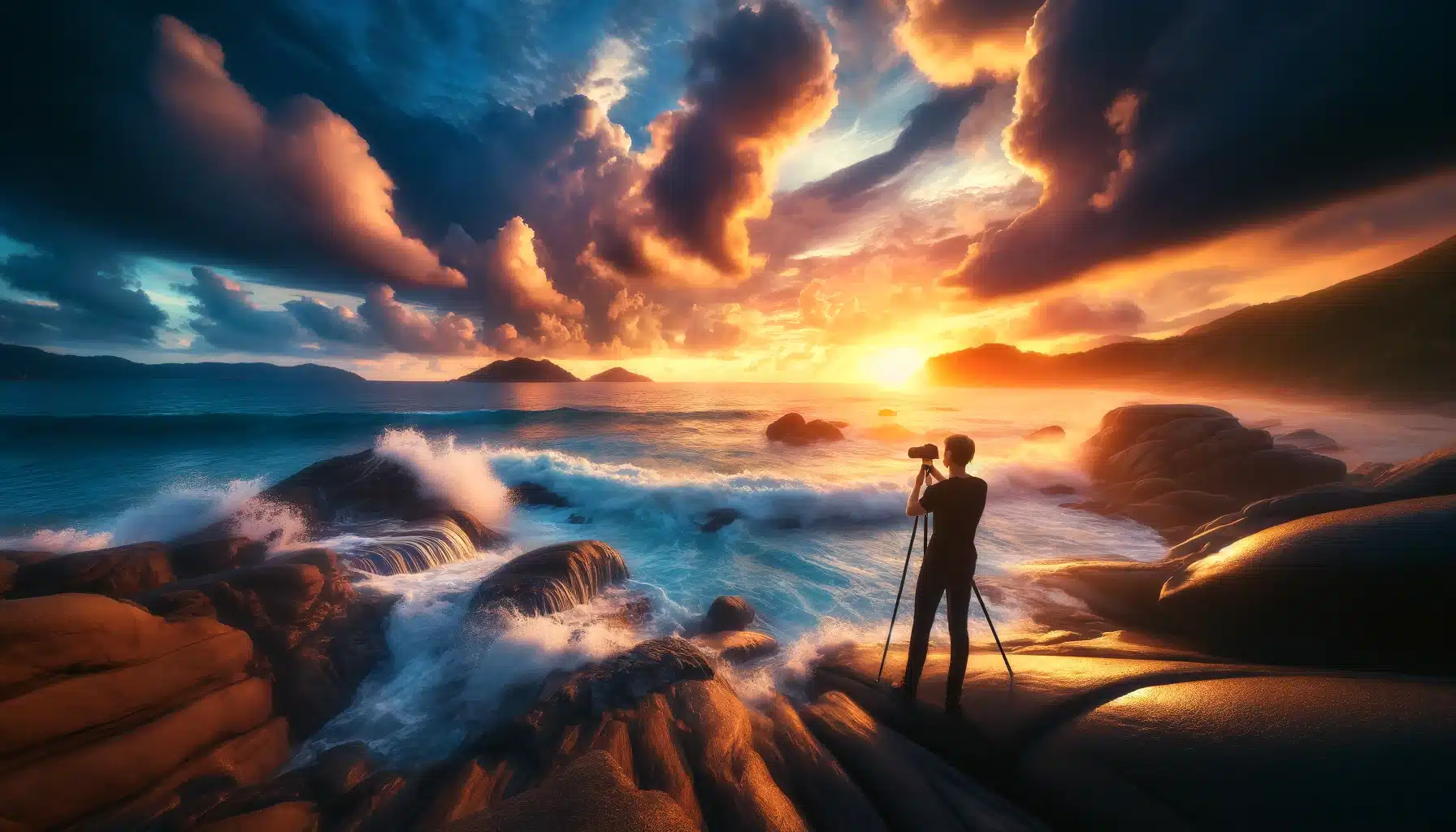
First things first, you gotta have the right gear. You ain’t gonna get good shots with just any old camera. You need something that can handle the splashes and them unpredictable waves. I recommend somethin’ like a camera that can shoot fast, like the EOS R8, or somethin’ with a good zoom lens, especially if you ain’t lookin’ to get too close to them waves. You don’t wanna end up soaked, trust me! A telephoto lens is mighty helpful for catchin’ the action from a safe distance. If you’re a bit tighter on money, there’s the EOS R50 with a 18-150mm lens, and that’ll work just fine for most folks.
Now, let’s talk about them camera settings. It’s important to know what kind of shutter speed you need. If you’re lookin’ to freeze them waves in mid-air, you need a quick shutter speed, like around 1/1000 of a second. That’ll catch them water droplets just right. But if you’re wantin’ to get them big splashes, you might wanna slow it down a bit, maybe to about 1/250 of a second. You don’t want the whole thing blurry, though, so keep it in check. A wide aperture helps too, between f/4 and f/8 for those smaller droplets. If you’re after the bigger waves, something like f/14 will help keep everything sharp and in focus.
Think about your composition. This ain’t just about pressin’ the button and hoppin’ away. You gotta think about what’s in the frame. The sea is always movin’, and the sky, it moves too but a little slower. You wanna capture that movement, but without makin’ it too blurry. A slower shutter speed is good for that, like 1/250, but you’ll need a tripod or somethin’ to hold that camera still. You don’t want your shot to end up all wobbly-like, trust me.
Also, you gotta keep your camera dry. The ocean’s always messin’ with ya. One minute it looks calm, the next minute—whoosh! Water everywhere! So, make sure you got a good rain cover or some kind of protection for your gear. Ain’t no use havin’ a fancy camera if it’s all wet and ruined.
- 1. Know your gear: Get a camera with fast continuous shooting and a good telephoto lens.
- 2. Shutter speed matters: Freeze fast waves with 1/1000, or slow it down to 1/250 for bigger splashes.
- 3. Aperture helps: f/4 to f/8 for small drops, f/14 for bigger splashes.
- 4. Keep your camera dry: Use a cover to protect your gear from the ocean’s unpredictable nature.
- 5. Composition counts: Don’t just shoot randomly—think about your shot before takin’ it.
If you’re out there on a beach somewhere, maybe at that Breidamerkursandur Beach near the Jokulsarlon lagoon in Iceland, like some of them fancy photographers do, you’ll wanna make sure you’re payin’ attention to the light. Early mornin’ or late evenin’ is best, when the light’s all soft and gives them waves a nice glow. If you’re shootin’ in the middle of the day, the light can be too harsh, and it might mess up your shot. The trick is to find the right balance. Too much light makes everything look washed out, but too little light makes everything too dark. You gotta work with what you got.
And don’t forget your angles. Sometimes, you wanna be right up close to them waves to capture all the power, other times, stand back and zoom in with that telephoto lens. You can make the waves look big and dramatic that way, without even havin’ to get wet! Think about what you’re tryin’ to show in your picture, whether it’s the wave crashing on the rocks or the sea foam spreadin’ across the beach.
One last thing I’ll tell ya—be patient. The ocean ain’t predictable. You might wait a long time for that perfect shot, but when it happens, it’ll be worth it. So take your time, experiment, and see what works best for you. Ain’t no rush in gettin’ the perfect picture. Just enjoy bein’ out there and workin’ with what nature gives ya. You might be surprised what you can capture when you take your time and pay attention to the little details.
So, there you have it. Whether you’re freezin’ them waves in mid-air or wantin’ to capture that soft mist that hangs over the ocean, with the right gear and settings, you can get them shots you dream about. And remember, the sea’s a mighty thing. It don’t always play nice, but that’s what makes a good photograph. You just gotta be ready for it when it decides to show off.
Tags:[Photography, Ocean Photography, Wave Photography, Seascape Photography, Camera Settings, Photography Tips, Telephoto Lens, Water Photography, Dynamic Photography, Freeze Motion Photography]