





Sunset photography has a special kind of magic.
It’s calm, emotional, and fleeting—and that’s exactly why so many photographers love it.
As a photographer based in Seattle, I spend a lot of evenings chasing light along the waterfront, watching the sun sink behind Puget Sound. With dramatic clouds, coastal reflections, and ever-changing skies, Seattle is one of the best places in the U.S. for sunset photography.
The best part?
You don’t need a professional camera to capture it.
Today, I want to share how to take stunning sunset photos using just your smartphone, based on real-world shooting experience.

The 6 Golden Rules of Mobile Sunset Photography
- Choose the right time and location
- Keep the image sharp with proper exposure
- Use silhouettes for a minimalist look
- Adjust color temperature for mood
- Use telephoto for dramatic details
- Use wide-angle for epic sunset scenes
Let’s break them down one by one.
1. Choose the Right Time and Location
Great sunset photos start with preparation.
Shoot During Golden Hour
The 30 minutes before and after sunset, known as golden hour, offer the best natural light. The sun sits low on the horizon, producing soft shadows and warm colors that are perfect for photography.
In Seattle, sunset colors often peak after the sun drops below the horizon, especially when clouds catch the remaining light. Arrive early—and stay a little longer than you think you should.
Find an Open View
Look for locations with a clear western view:
- Beaches and waterfront paths
- Hilltops and scenic overlooks
- Open parks or elevated city viewpoints
Seattle locations like Alki Beach, Kerry Park, and areas along Puget Sound offer unobstructed horizons and dramatic backdrops.
2. Keep the Image Sharp with Proper Exposure
When shooting sunsets with a phone, clarity matters.
Tap on the sky to focus, then slightly lower the exposure using the brightness slider. This helps preserve highlight detail and keeps colors rich instead of washed out.
A slightly underexposed sunset photo almost always looks better than an overexposed one.
3. Use Silhouettes for a Minimalist Look
Silhouette photography works beautifully at sunset.
Place a subject—such as a person, tree, building, or boat—between your phone and the sun. Expose for the bright sky, not the subject.
The result:
- Clean shapes
- Strong contrast
- A dramatic, timeless feel
The key is choosing subjects with recognizable outlines and keeping the background simple.
4. Adjust Color Temperature for Mood
Most smartphones now include a Pro or Manual mode.
Open your camera settings and look for White Balance (WB). Increase the Kelvin value to around 5500K–6800K to enhance warm tones.
This adjustment:
- Matches natural sunset colors more closely
- Creates a warmer, more emotional image
- Adds atmosphere and depth to the scene
Warm tones help convey calm, nostalgia, and romance—exactly what sunsets are about.
5. Use Telephoto for Dramatic Details
Don’t overlook your phone’s zoom lens.
Switch to 2x, 3x, or higher to:
- Make the sun appear larger
- Compress distance between elements
- Highlight glowing clouds and horizon details
Telephoto lenses simplify the scene and create powerful, focused compositions—especially when the sun is close to the horizon.
6. Use Wide-Angle for Epic Sunset Scenes
Wide-angle lenses are perfect for storytelling.
They allow you to capture:
- Foreground textures like rocks, roads, or sand
- Midground elements such as water or city streets
- Vast skies filled with color and motion
In Seattle, wide-angle sunset shots often shine when they include reflections on the water or leading lines along the shoreline.
Get low, include a strong foreground, and let the sky dominate the frame.
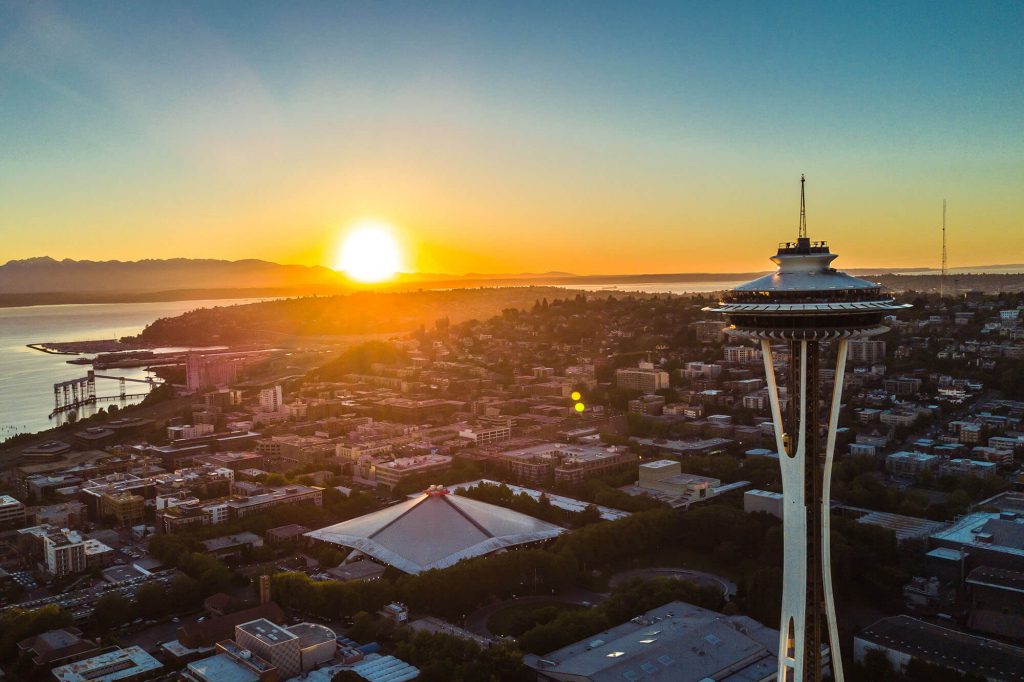
Final Thoughts: Sunset Photography Is About More Than Technique
To recap:
Choose the right time and place
Control exposure for clarity
Use silhouettes for impact
Warm up the colors
Zoom in for detail
Go wide for scale
Every sunset feels different.
Some are bold and fiery, others soft and quiet—but all of them remind us to slow down and appreciate the moment.
With nothing more than your phone and the right light, you can capture something truly meaningful.
So next time the sky starts to glow, don’t rush past it.
Stop. Look up. And take the shot.